VoltPool had a fantastic first year validating over 3,000 blocks and rewarding over 2 million ADA to its 2,000 delegators on the Cardano blockchain. The year started running node version 1.24.0 and ended with 1.31, while supporting over four relays and two block producers: VOLT and VOLT2.
VoltPool is hosted in Azure with premium-grade solid-state drives and architecture supporting 99.95% uptime. There are four ways to obtain the status of signing a block:
- Validated — the block producer produced the block.
- Missed — the block producer is down, keys are expired, or propagation issues prevented signing.
- Ghosted — the producer is up, but network propagation caused the node to miss signing.
- Stolen — two pools were slated to sign the same block (a slot battle) and we lost.
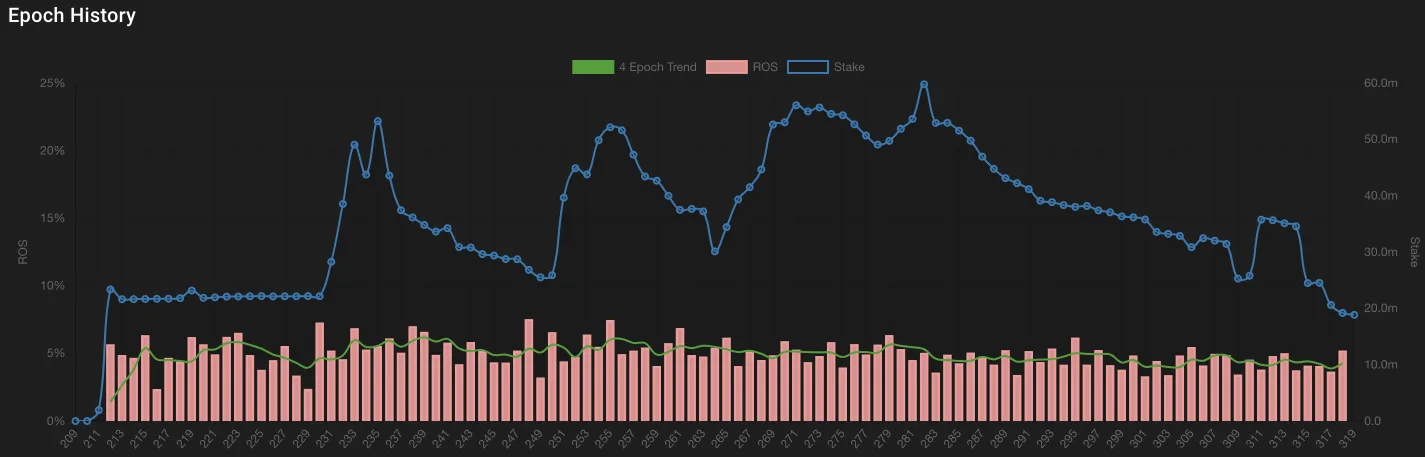
Below is the status of VoltPool from Epoch 237–319:
Highlights of the year
- Cardano had 74 epochs. VoltPool signed blocks and rewarded delegators on every single epoch, totaling over 2 million ADA — one reason VoltPool is a top-100 pool.
- Across those 74 epochs we had a mix of stolen and ghosted blocks and just one missed block, for a pool performance of 99.28%.
- The single missed block was the operator's fault. We're transparent: we boast of being a top-100 pool, but our operators aren't perfect. 2022 will bring tighter processes, performance enhancements, and resiliency.
In summary, Cardano saw a dramatic increase in transaction and network usage, causing congestion and propagation issues for stake pool operators network-wide. Block size will increase to support the load, and a P2P network is coming for faster propagation. Overall, VoltPool is doing well and has produced rewards for its delegators every epoch.
Validating blocks faster than lightning,
Drew